This guide provides general information and planning estimates. Read our disclosure.
Why this decision matters before signing or spending
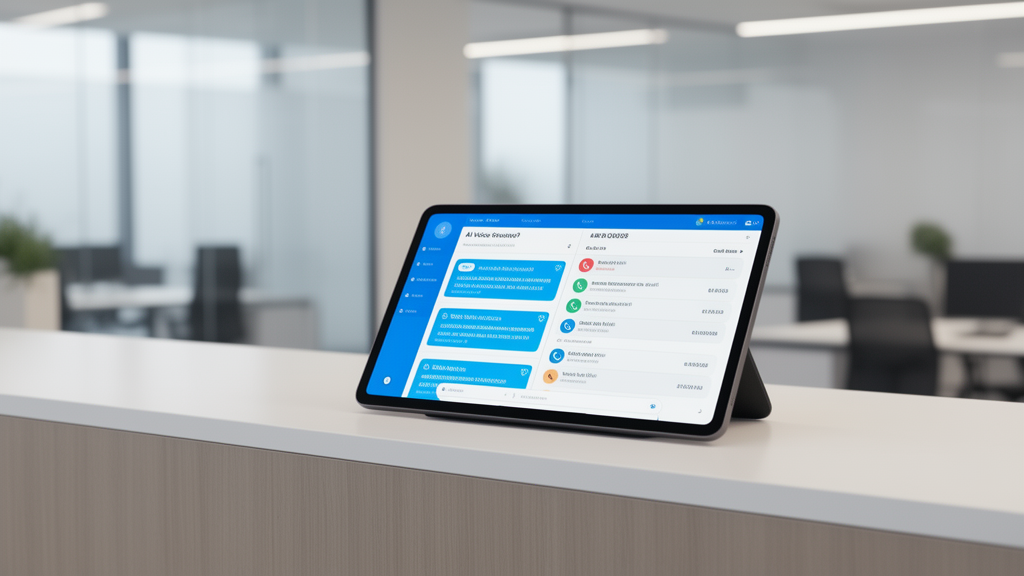
An AI receptionist is software that answers calls, greets callers, captures intent, books appointments, routes urgent calls, and logs outcomes. A virtual assistant is a remote human—or a managed human service—who answers calls and may also handle email, scheduling, and CRM updates. The decision is not 'human vs robot' in the abstract; it is a coverage and error-cost decision. For a small business or homeowner-facing service, every unanswered call has a dollar value: missed booking, delayed quote, or emergency leak. Before signing, define required hours, call types, average call duration, booking value, and who handles exceptions. AI wins on 24/7 simultaneous coverage and low marginal cost. A VA wins on judgment, complex conversations, and cross-task support. The expensive mistake is buying either without mapping call outcomes to revenue and labor.
Core numbers and baseline formula breakdown
Use a total economic cost formula, not sticker price:
Monthly total cost = setup amortization + platform/retainer + usage + telephony/integration + management + failure cost.
| Line item | AI receptionist planning range | Virtual assistant planning range |
|---|---|---|
| Setup/training | $0–$1,500 | $250–$1,000 |
| Monthly platform/retainer | $49–$499 | $500–$4,500 |
| Usage/overage | $0.10–$0.50/min | Included in hours or $1–$3/call |
| Telephony/integration | $0–$100/mo | $20–$100/mo |
| Management | 1–4 hr/mo | 2–6 hr/mo |
Failure cost = misrouted or missed calls × booking rate × average job value × gross margin. Add owner/team transfer time: transfers × minutes × loaded labor rate. Cost per covered call = total monthly cost ÷ calls answered. Track accuracy as first-call resolution, correct routing, and callback rate. Use your own quotes; ranges are budgeting inputs, not vendor benchmarks.
Realistic hypothetical scenario with transparent math
Assume a home-services operator receives 150 calls/month, average 3.5 minutes, 30% after-hours. Average booked job is $500 with 50% gross margin, so one booked job contributes $250. Booking rate for answered calls is 25%. Owner loaded labor is $30/hour.
AI receptionist: setup $750 amortized over 12 months = $62.50; platform $149 includes 200 minutes; usage is 525 minutes, so 325 overage minutes × $0.30 = $97.50; integration $25; management 2 hours × $30 = $60. Base = $394.00. It resolves 90% and transfers 15 calls to the owner: 15 × 5 minutes × $30 = $37.50. It misroutes 3 calls: 3 × 25% × $500 × 50% = $187.50. Total economic cost = $619.00. Cost per covered call = $619 ÷ 150 = $4.13.
Virtual assistant: 15 hours/week × 4.33 weeks × $25 = $1,623.75; setup $500 ÷ 12 = $41.67; telephony $35; management 2 hours × $30 = $60. Base = $1,760.42. It misroutes 4.5 calls: 4.5 × 25% × $500 × 50% = $281.25. Total = $2,041.67. Cost per covered call = $13.61. If the VA also handles 5 hours/week of email and CRM work, allocate 40% of retainer to calls and rerun the math.
Decision criteria: when results trigger action
Choose AI when routine calls exceed 60% of volume, after-hours calls exceed 20%, callers accept self-service for booking/rescheduling, and average job value is below the cost of a dedicated human. Choose a VA when complex triage, empathy, negotiation, or multi-step CRM work dominates, or when one person can absorb calls plus admin. Hybrid: AI answers and books routine calls; VA or owner handles transfers during business hours.
| Criterion | AI receptionist | Virtual assistant |
|---|---|---|
| Coverage | 24/7, simultaneous | Scheduled hours, one call at a time |
| Best call types | FAQs, booking, routing | Complex, upset, high-value |
| Accuracy risk | Intent gaps, accents, edge cases | Training gaps, turnover, inconsistency |
| Cost curve | Low fixed, usage-based | Hourly/retainer, scales with time |
| Management load | Prompt/rules updates | Hiring, training, QA |
Action thresholds: if missed calls exceed 10% of inbound volume, add coverage now. If cost per covered call exceeds 15% of average gross-margin per job, redesign the workflow. If misroute rate exceeds 8%, add human backup or change vendor.
Common industry pitfalls and expensive mistakes to avoid
- Buying on per-minute price alone and ignoring setup, integration, transfer time, and misroute cost.
- Routing every call to AI without a human escalation path for emergencies, complaints, or high-value quotes.
- Giving a VA call duties without a script, CRM access, call-recording policy, and QA cadence.
- Measuring answered calls instead of booked jobs, correct routing, and callback completion.
- Forgetting after-hours coverage: a VA schedule that ends at 5 p.m. can leave 30% of demand unanswered.
- Overcustomizing AI prompts before testing the top 10 call intents; complexity raises errors and maintenance.
Step-by-step implementation plan
- Export 30 days of call logs: volume, time, duration, caller intent, outcome, and booked value.
- Define must-answer calls, can-automate calls, and escalation rules with named owners.
- Request itemized quotes from two AI vendors and two VA providers using the same call volume and hours.
- Build a 10-intent test script: booking, reschedule, pricing, emergency, complaint, vendor, spam, Spanish-language request, after-hours, and transfer.
- Run a 14-day pilot with call recording, weekly QA, and a simple scorecard: answer rate, first-call resolution, misroutes, transfers, bookings, and cost per covered call.
- Compare total economic cost and accuracy; keep the option that meets coverage without exceeding your failure-cost budget.
- Document prompts, scripts, escalation rules, and backup coverage before scaling.
Final review checklist before execution
- Confirm required coverage hours, including weekends and holidays.
- Calculate average job value, gross margin, booking rate, and missed-call cost.
- Get itemized quotes with setup, usage, overage, integration, and cancellation terms.
- Test the top 10 call intents and review recordings.
- Define escalation rules for emergencies, complaints, and high-value leads.
- Assign a manager for QA, prompt updates, and VA training.
- Set a 30-day scorecard: answer rate, misroute rate, bookings, and cost per covered call.
- Verify backup coverage for outages, turnover, and peak call spikes.
Sources and further reading
Read the original material and check details against your own situation.
- Microsoft: planning an automation projectlearn.microsoft.com
- NIST: small business cybersecuritywww.nist.gov
- Salesforce: understanding CRMwww.salesforce.com
Something needs a closer look?
Help keep this guide useful. Send a correction with the article title, the passage and a supporting source.